KYASEKYA
NIMHANS Movie Marathon
Film Curation, Branding, Publication, System Design
Duration/Time: 6 months/2024
In a dynamic collaboration between NIMHANS and Srishti, NIMHANS identified a pressing need for innovative outreach initiatives to enhance awareness and understanding of mental health and neurodivergence within the community.
For my thesis project, I proposed an endeavour; curating, organising, and designing a three-day film marathon at their convention centre, focusing on the representation of mental health and neurodivergence in Indian cinema throughout the years.
This initiative, titled KYASEKYA, will spotlight a meticulously curated selection of nine films that delve into these complex themes. Scheduled to commence on World Mental Health Day in October 2024, the film marathon is currently undergoing meticulous planning and organization, aiming to provide a platform for meaningful dialogue and reflection on these critical issues.
Since the project is still in progress, we are unable to share the entire output at the moment. To view the process documentation please click

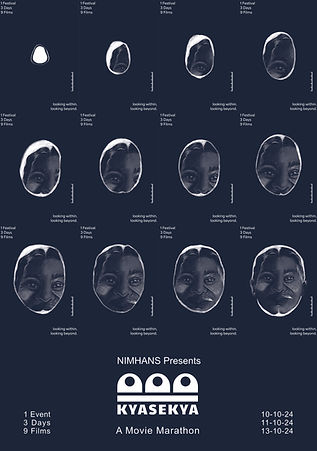

The name KYASEKYA roughly translates to “from what to what” in English. The name reflects the concept of observing transitions over time and the desire to recognize and understand these changes. As the event emphasizes representation, it acknowledges how facts, beliefs, and perceptions shift and evolve, during the process of percieving and then representing. Considering that NIMHANS has centers across India, Hindi, being the most commonly spoken language in the country, seemed like a fitting choice if this event were to expand to all their centers in the future.
The logo symbolizes individuals seated in front of a screen, drawing inspiration from the familiar visual of choosing seats when booking movie tickets for the cinema hall. The aim was to capture the essence of a cinema hall with a single motif that could serve as a versatile symbol across various contexts. The trio of individuals also represents the three films spanning different eras, screened each day.
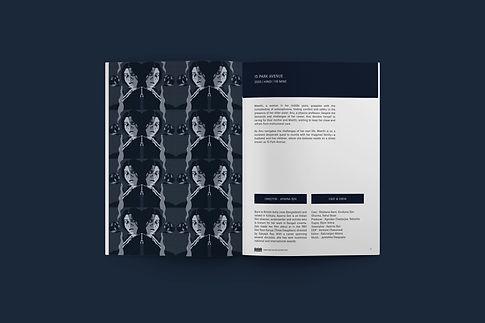
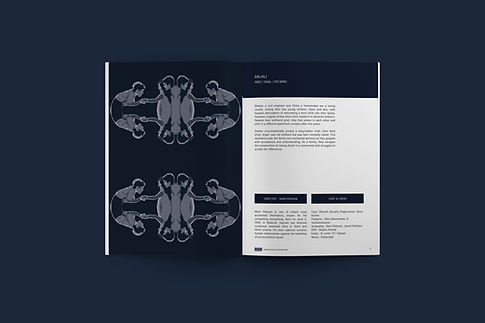
In many instances, the visual identity mirrors the appearance of a CT or MRI scan, initially giving the impression of viewing a series of medical scans. However, upon closer inspection, one discovers that the content differs. This choice to mimic scans stems from the realization that while mental health is intangible, these scans serve as our sole means of visualizing what may be transpiring internally, beyond the surface level. The key aspect of this mimicry lies in visual repetition and images are depicted using high-contrast lighting and shadows to emulate the visual style of MRI scans.
Furthermore, considering that mental health and neurodivergence are often assessed in terms of rationality, along with mimicking medical scans, the Absurdism in the visual identity is ironically fitting. It serves to suggest that one’s rationality can also be irrational and encourages individuals to derive their own meaning based on perception, awareness and knowledge rather than solely relying on what is being presented.